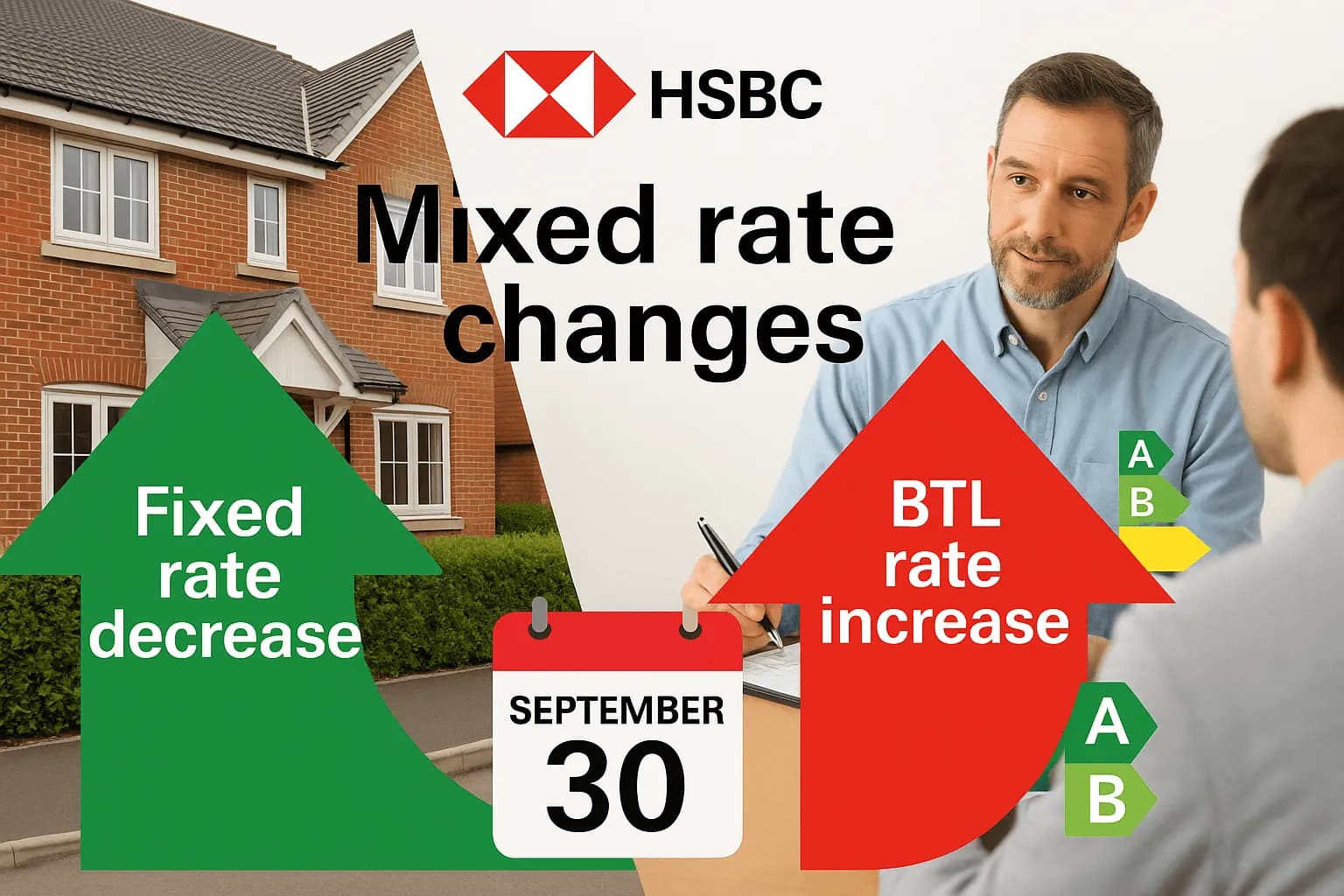
Market emails like “we’re increasing selected rates” are a timely reminder that mortgage pricing can shift quickly — sometimes without a major headline change in the Bank of England Base Rate. If you’re about to buy, remortgage, or switch deals, even a small movement in rates can affect monthly payments and the overall cost of borrowing.
In this update, we explain what a “selected rate increase” typically means, who may be affected, and what practical steps borrowers often take to stay informed.
What does “increasing selected rates” mean?
When a lender announces they are increasing selected rates, it usually means:
- Not every mortgage product is changing — only certain deals (for example, specific fixed-rate terms, loan-to-value tiers, or product ranges).
- The change is often effective from a set time and date, especially for new applications or new product reservations.
- The lender may be responding to its own funding costs, risk appetite, capacity, or market competition.
This kind of update doesn’t necessarily indicate a sudden market-wide shift on its own. Instead, it’s part of the normal day-to-day repricing that happens across lenders as they manage their mortgage ranges.
Who could be affected right now?
A selective rise in rates can matter most if you’re at a point where you’re choosing or securing a deal. Typical groups who may notice the impact include:
Home buyers (including first-time buyers)
If you’re applying for a new mortgage, the deal you were considering could become more expensive if it falls within the lender’s “selected” products. For those early in the process, it may influence affordability calculations and the size of loan available.
If you’re buying your first home, it can be helpful to understand how changing product pricing might affect your options.
Home movers
If you’re planning a move, rate changes can affect the product you take for the new property (or the additional borrowing element, if you’re topping up). Timing can be important when you’re aligning a mortgage application with an offer being accepted and a conveyancing timeline.
Remortgagers approaching the end of a fixed rate
If you’re coming to the end of your current deal, lenders’ repricing may impact what’s available when you switch. Some people compare remortgage options early so they understand what deals are on the market and how they might change before completion. Read our remortgaging guide.
Existing customers considering a product transfer
If your current lender offers product transfers (switching to a new deal without moving lender), a “selected rates increase” could also apply to parts of that range. Details vary between lenders and by product type.
Why do lenders raise rates even if the Base Rate hasn’t changed?
Mortgage pricing is influenced by more than the Base Rate. Lenders often adjust rates due to:
- Funding and swap rates: Fixed-rate mortgages are commonly priced using longer-term market rates (often linked to swap rates), which can move daily.
- Operational capacity: If a lender receives very high application volumes, it may reprice to manage demand.
- Risk and loan-to-value (LTV) appetite: A lender may change pricing for higher or lower deposit brackets depending on performance and risk levels.
- Competitive positioning: Lenders regularly adjust to stay competitive in some segments while stepping back in others.
What the email didn’t include (and what matters)
This update did not provide figures such as how much rates are increasing, which specific products are affected, or the effective date/time. Those details are essential, because a change could be minor (measured in fractions of a percent) or more meaningful — and it may apply only to a narrow set of deals.
If you’re mid-application or comparing products, it’s worth checking whether the deal you’re considering is affected and whether the lender’s change applies to new submissions, existing applications, or both.
What can borrowers do in response (without rushing)?
Rate changes can create understandable uncertainty, but it’s usually more helpful to focus on process and clarity rather than reacting to headlines.
Here are general, non-advice steps people commonly take:
- Confirm the product and timing: If you have a product in mind, check when the change applies and whether the rate can be reserved.
- Re-check the total cost, not just the rate: Fees and incentives can change the overall cost of a mortgage, even if the headline rate looks similar.
- Keep documents ready: Up-to-date payslips, bank statements and ID can help avoid delays if timescales become important.
- Compare like-for-like: Ensure you’re comparing the same term, LTV, fee structure and repayment basis.
For some homeowners, alternative borrowing routes may also be relevant depending on the purpose (for example, major renovations). Our guide to secured loans explains how secured borrowing can work in general terms.
Key Takeaways
- A lender increasing selected rates means only certain products are changing — not necessarily the whole market.
- The email update did not provide figures or an effective date, so the real impact depends on which specific products are affected.
- Buyers, remortgagers and customers considering product transfers may feel the impact most if they’re close to choosing or reserving a deal.
- Mortgage pricing can change due to funding costs, swap rates, demand, and risk appetite — not only the Bank of England Base Rate.
How Deal Direct Can Help
Deal Direct Financial Solutions is a UK-based, FCA-authorised mortgage broker (FCA #478726). If you’re buying, moving, or reviewing your next deal, we can help you understand what’s available across the market and what the latest product changes could mean for your options.
You can explore our guides on remortgaging or speak to an adviser to discuss your circumstances. To take the next step, contact us for a free initial chat and quote.
Important: This article is for informational purposes only and does not constitute financial advice. Your home may be repossessed if you do not keep up repayments on your mortgage.